Modelling in Paris 2026: Agencies, Visas & Earnings
By Alina Pavlushova · Modelling coach
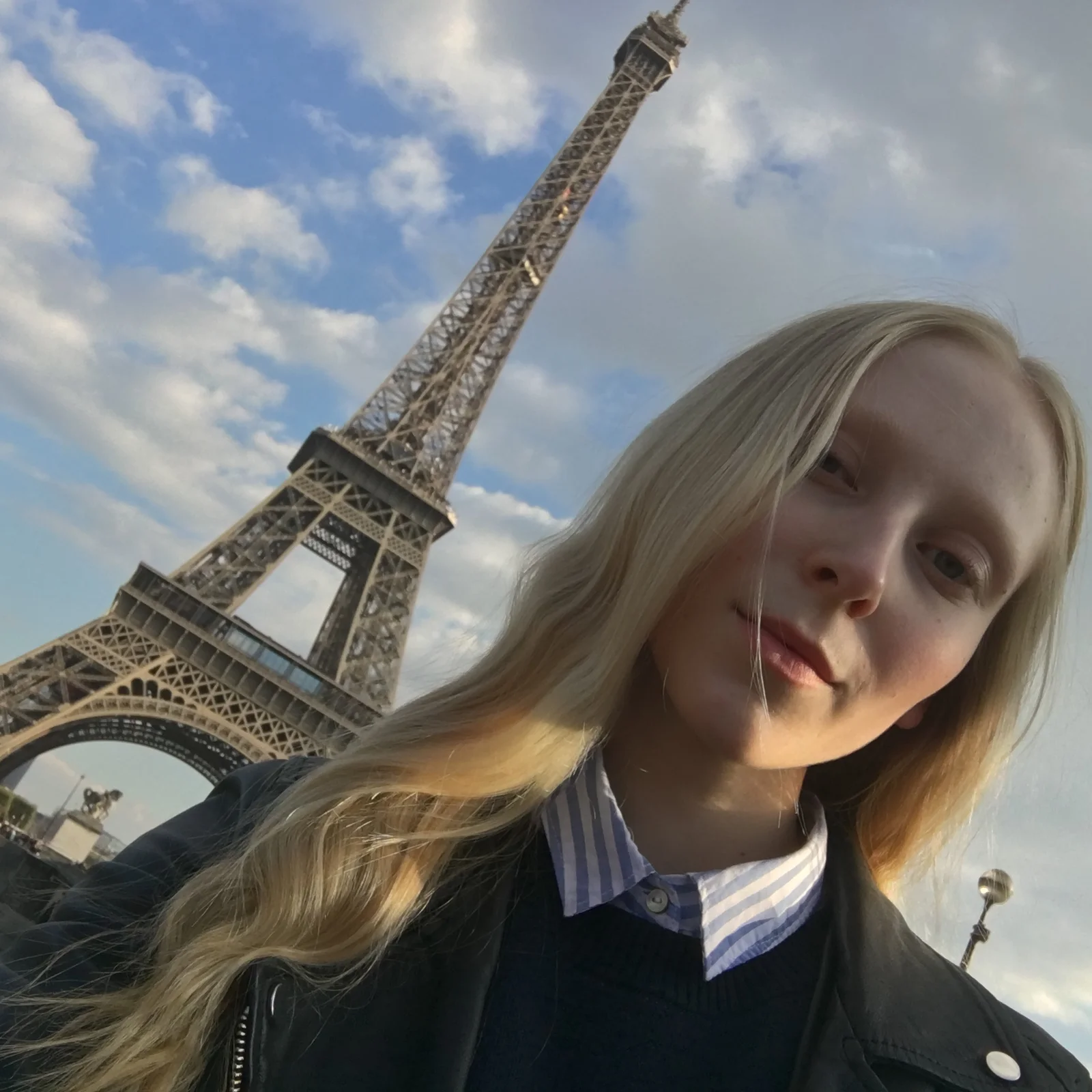
Paris is the summit. Of the whole "big four" it's the most prestigious and the most closed market: the birthplace of haute couture, the highest bar in fashion and editorial, the city that's hardest of all to break into. Paris is one of my own markets: I walked its castings and worked here, so I'm not repeating other people's stories — I'm speaking from the inside. And the first thing I'll say honestly: Paris doesn't coax you and it gives no discounts for status. It either takes you up to its level or it doesn't.
From a distance Paris is the Chanel and Dior runways, the couture shows, the covers and the images that travel the world. In reality it's an extremely demanding market with the strictest selection and less everyday commercial work than London or Milan. You come here not for fast money but for a name, high-fashion experience, and a line on your portfolio that then works for you everywhere.
I'm not going to talk anyone out of it — Paris gave me a bar I still measure myself against. But you should go in with your eyes open. Let's walk through it in order: the look and height that get booked, how agencies, status and commission work, the visa and legal-work question (which works differently in France than in Britain), what models really earn and how you get paid, and who this market suits and who it doesn't. In short, this is the honest answer to how to become a model in Paris without ending up disillusioned.
Paris prizes prestige and the highest bar
The first thing I explain to a model before Paris: this market works differently from Milan or London. Milan is a working market of showrooms and fittings, London is creative and commercial, and Paris is about prestige and high fashion. It's the only city of the "big four" with its own Haute Couture Week, the birthplace of couture and, by broad industry consensus, the foremost fashion capital in the world. The selection here is the strictest, and the door is the heaviest.
The character of the work follows from that. There's less everyday commercial and e-commerce work in Paris than in London; what's concentrated here is top editorial, big-house campaigns and the highest-level runway. So Paris isn't about volume of shoots or fast money — it's about the bar: a name made here opens doors on other markets.
I'll be honest: it's precisely this height that makes Paris harder on a newcomer. There's almost no "easy" warm-up work, competition is fierce, and there are more rejections than anywhere. But to those it takes, it gives the strongest fashion capital of all.
How to become a model in Paris: the work that really awaits
Strip away the romance, and a model's work in Paris splits into a few segments:
- Runway and haute couture. The summit and the most prestigious — the fashion weeks and the couture shows. There are few slots and the selection is fierce, but that's exactly what makes a Paris portfolio so valuable.
- Editorial and campaigns. Top shoots for the glossies and big-house campaigns. Paris is famous for high editorial — it's the city's strongest suit.
- Showrooms and fittings. Around the seasons — fittings and working with the houses' collections.
- Commercial. It exists, but there's noticeably less of it than in London or Milan: Paris is a market of image, not high-volume commercial shooting.
What there's less of than a newcomer dreams: warm-up work and guarantees. Paris rarely books "on potential" for later — it looks for an already strong high-fashion type. Accept that in advance, or it stings.
What look and type are in demand
Paris is the most fashion-oriented and the strictest of the four. The brief is specific: a strong, characterful, "fashion" face rather than safe prettiness; long runway proportions; a groomed, healthy look; and the ability to carry high fashion on the runway and in front of the camera. Individuality and a strong type are prized, but the quality bar is higher than anywhere.
A word on what counts as non-negotiable rather than a nice-to-have:
- well-kept skin and hair, and tidy hands and feet — a model is seen up close at a fitting;
- minimal make-up at castings: they look at you as you are;
- a confident walk — checked at almost every runway casting;
- fresh, current snaps (polaroids) and digitals.
Paris loves character in front of the camera — but not drama in the work. Even so, this is the market norm, not the law: for commercial and digital work the demands are softer than for the runway and couture — but it's the runway and editorial that make Paris Paris.
Height, age and measurements: the real numbers
There's a lot of myth here, so let's stick to facts and skip the hard promises. The figures below are a practical guide, not a law — and in high fashion Paris holds the bar more strictly than most.
| Parameter | Practical guide |
|---|---|
| Height (women) | usually ~177–182 cm expected for runway and high fashion; ~175 cm is the practical floor |
| Height (men) | usually ~185–190 cm for fashion; ~183 cm as the lower bound |
| Measurements (women) | "model" measurements to suit the sample garments; exact figures are asked at the casting and re-checked |
| Commercial / e-commerce | height and measurement requirements softer, but the commercial segment in Paris is smaller |
| Age | scouting usually from 16; under 18 only with written parental or guardian consent and the extra protections owed to a minor |
I deliberately write 177–182 as a guide for the runway, not a hard threshold. But honestly: Paris isn't the market where a height near the floor is easily offset by commercial work, because there's little commercial work here. And on age: under 18 you're a minor, written parental consent is required, and working conditions are regulated more strictly — don't brush that aside, even if an agency is rushing you.
Visa and legal work: how it works in France
This is the most important section, and the one usually flattened into "you need a Schengen visa." In truth it's more nuanced. The good news for a Russian model: France is in the Schengen area and the EU, so on visas Paris is closer to Milan than to London — there's none of the British "visa national" business with a visa required even for castings. But a Schengen visa on its own does not grant the right to paid work.
It's important to separate two different things: "coming to be seen" and "coming to work".
| Purpose | What you need | Notes |
|---|---|---|
| Castings, viewings and meetings with agencies | Schengen visa | covers business viewings and meetings, but not paid work — no paid shows or shoots |
| Paid modelling work | work authorisation (autorisation de travail) | the runway and shoots are work; the host agency-employer arranges the authorisation |
The key fact: in France there is no separate "model visa". A foreign model's legal paid work is arranged through the general work-authorisation system for foreign workers — there's a dedicated official document for it (the foreign-model collaboration agreement under Article L.7123-17 of the Labour Code), and all of it is organised by a licensed agency, not by the model herself.
And here is the crucial French quirk that doesn't exist in Britain. Under French law a model is a salaried employee (salarié) of the agency, not self-employed. Any paid modelling contract is presumed by law to be an employment contract (Article L.7123-3). So the agency hires you as an employee and makes you available to clients, and the whole thing rests on the agency's licence (licence d'agence de mannequins) — in Paris you should work only through an agency that holds one.
Working as a paid model on a tourist visa without a work authorisation is illegal. It risks a fine, removal and problems with future visas. The host party shares the liability.
A word for Russian and CIS nationals. There's no blanket entry ban, but since 2022 getting a Schengen visa has tightened, and Russian nationals resident in Russia are now more often issued single-entry visas — meaning a fresh application for every trip. From October 2025 the EU is phasing in the Entry/Exit System (EES, biometrics at the border), with full launch expected around April 2026. Budget more time, documents and patience. It doesn't mean "impossible" — it means "plan ahead, and only through a trusted agency." Immigration rules change, and this is not legal advice — before you travel, check with the French consulate and official sources.
The contract, status and commission
The contract is where models most often come unstuck, because they sign without looking. Let's go through it calmly.
As I said, in France a model is a salaried employee of the agency, and that shapes everything: you have an employment contract, payslips and social-security contributions, and the agency itself must hold a licence (licence d'agence de mannequins). That protects a model more than a vague "collaboration agreement" does, but it also means working properly, on the books, through a licensed agency. When I worked in Paris, that French strictness — a proper employment contract and the agency's licence — felt like needless bureaucracy at first, but it turned out to be protection.
On commission. In France it's set up as a double commission: the agency takes a percentage (up to 20%) of your fee for image rights, and charges another roughly 20% to the client on top. To make it concrete, using the French collective agreement's own worked example: on a €1,200 bill to the client the model receives around €800, and the agency keeps €400. That's an illustration of the structure, not a promise about you — your actual figures must be written into the contract.
What I always ask you to look at:
- the percentage withheld and what else is deducted — advances, costs, who pays for what;
- the timing and order of payouts: money comes through the agency and arrives late;
- penalties and exclusivity — how tightly the contract binds you and what an early departure costs;
- the mother agency: your own agent back home keeps an eye on the terms and steps in during disputes, and for a first trip that sharply lowers the risk;
- licence and reputation — what people who've already worked with this agency say.
How to avoid scams
The rule I repeat to everyone: a real agency earns commission on your bookings — it doesn't take money from you up front. If at the outset you're asked to pay for a "compulsory" portfolio, registration, courses or a guaranteed contract, it's almost always a scam. Applying to a proper agency is free: Marilyn, for instance, states outright that it never asks for money to become a model.
Warning signs worth knowing:
- a paid portfolio or paid training as a condition of working together;
- "scouts" in direct messages from vague accounts asking for suggestive photos or money, writing with errors and name-dropping big names;
- a woolly contract with opaque penalties instead of a proper employment contract;
- pressure and urgency — "decide today, the slot is going";
- reluctance to show a licence, past projects and contacts for models who've worked there.
A word on the big agency names: scammers often hide behind them on social media. Check against the agency's official site and its real contacts, not whoever messaged you first. Safety on set is part of this too: a legitimate agency doesn't summon you to a "shoot" in a private flat with no crew, and doesn't blur the line between modelling and escort work.
What to prepare and how to apply to an agency
Good news: to be seen by Paris agencies you don't need to fly to Paris or pay for a shoot. The major agencies accept applications online and for free. The basic kit asked for almost everywhere:
- Snaps (polaroids). Simple photos with no make-up, filters or retouching, in daylight, in close-fitting plain clothing: front, profile, full length and a close-up of the face. The agency needs to see the real you.
- Measurements. Height, bust, waist and hip girths, and shoe size — in centimetres, accurate as of today.
- Digitals. If you already have shoots, a few of your strongest frames.
- Walk. If it comes to a runway casting, be ready to walk.
How applications actually work — using verified Paris agencies as examples (check their official sites for current rules, which change):
- Elite Paris — one of the largest agencies in the world. New-face applications go through the scouting form on its site: up to three photos (full-length front, close-up, profile), no make-up, in natural daylight.
- Marilyn — a major agency; applications are accepted by email only to its scouting addresses (on the
@marilynagency.comdomain), with no in-person open calls or walk-ins. The agency states outright that it never asks for money to become a model. - Metropolitan — new-face applications go through the online form on its "become a model" page.
- Women Management Paris — an online "become a model" form; digitals are needed, professional photos are not.
- Next — a single network-wide recruitment form (its preferred way to apply).
Good, honest snaps and accurate measurements often count for more than an expensive glossy folder. If you want to prepare strong digitals and snaps, I cover exactly that in my training and on a photo day — it's the very material agencies use to decide. And before your first test shoot, run through the posing fundamentals — they're what make those frames look alive.
How much models earn in Paris and how you get paid
I'll be honest: I won't name a day rate or a show fee, because the figures for one and the same person vary several-fold and depend heavily on segment, season, agency and luck at castings. Anyone who guarantees you an exact sum is someone I wouldn't trust.
Paris is a market with potentially high fees in editorial and big-house campaigns, but with less everyday work. So "a decent fee" and "money in hand" are not the same thing. More important than the figure itself is the payment mechanics:
- Double commission. The agency takes a percentage of your fee and adds a client supplement on top. What lands in hand is less than the "rate" you were quoted out loud.
- A salaried structure. Because you're an employee, the money runs through the agency with payslips and contributions, and arrives late. Budget a cushion for the first weeks and for life after you get home.
- Moving money home. This is a separate difficulty for Russian models, covered just below.
Since 2022, moving your earnings home to Russia has become genuinely hard. Visa and Mastercard cards issued by Russian banks don't work outside Russia, and cards from foreign banks don't work inside Russia — so the simple "withdraw in Paris, spend at home" approach fails in both directions. Major Russian banks are cut off from SWIFT, and transfers run into sanctions checks. There's no one-size-fits-all recipe, the routes change, and this isn't financial advice — agree the method and currency of payment with the agency before you sign.
That's why I honestly call Paris a market of image and prestige: you come here for the strongest fashion portfolio and a name, which then work for your career everywhere. That's a perfectly sound, workable goal.
Accommodation and daily life: the model flat
Free housing is an illusion best dispelled in advance. The model flat is usually shared: several models in one flat, and you pay for your bed. Most often it works the same way as on other markets: the agency first covers your housing and some costs, then deducts it all from your future fees. A weak season can end at zero or even leave you owing the agency — so the sums and the list of deductions must be in the contract.
Paris is an expensive city, and you should build that into your budget. Getting around is easiest on public transport with a Navigo pass; check the current fares on the Paris transport authority's own pages. Comfort in the model flat is middling: it's working accommodation near the castings, not a private studio thrown in as a gift. Knowing that in advance means you won't be disappointed on arrival.
Behaviour, discipline and stamina
Paris is a market of the highest level, and professionalism here isn't a nice-to-have but a condition of the work. A model is expected to be punctual (lateness dents your reputation instantly), courteous with the whole team, ready for long fittings and days on set without drama, and able to hold the pace.
A diva temperament kills a career faster than anything. On a market at this level, professionalism and reliability are prized, not stardom.
Add to that constant readiness. Heels and snaps in your bag, your phone reachable — castings can land out of nowhere and run one after another across the city.
Language and a day in the life
On language: unlike English-speaking London, Paris works in French — but on international shoots and shows the teams usually understand English too, so basic English is most often enough for the work. French is a big plus and a mark of respect; it opens doors and warms the team to you, and if you're serious about Paris it's worth improving. On set it matters more to understand simple instructions and react quickly than to hold a free-flowing conversation.
A model's day is not wall-to-wall glamour. More often it's a run of castings across Paris: the metro, the journey, the waiting, another casting — and now and then the long-awaited show or shoot. Out of the dozens who turn up, only a handful are booked, and so it goes every time. The stamina to hold that rhythm day after day matters more than any gift for a striking walk.
Social media as part of the job
In 2026, agencies weigh a model's Instagram on a par with her portfolio: the profile, the tone, the consistency. Even on the prestigious Paris market a strong account adds chances and sometimes helps at the seam between fashion and commercial. How much an agency wants to control your social media varies — some ask you to clear posts with them, some don't. Settle that in advance and put it in the contract.
The psychology of the market: pressure and the body
Paris is the most demanding of the four, and the pressure is felt most sharply here. The selection is strict, the competition huge, and there's almost no feedback — you rarely learn why you didn't pass. Any departure from the high bar is noticed at once.
That brings two main risks: burnout and an unhealthy relationship with your body. On weight I'll say it plainly: yes, in high fashion your shape is monitored and your measurements can become a topic. But that's no licence to drive yourself into harsh diets and starvation. A good manager will sooner help you hold a healthy shape than break your health; pressure to lose weight fast is a warning sign, not the norm. I always ask my students to make a pact with themselves in advance: a rejection here is a question of the current brief, not a verdict on your looks. Look after yourself — that matters more than any contract.
Seasonality: when it's best to go
Seasonality in Paris is pronounced and tied to the fashion weeks. The anchor points in 2026:
| Period | What's happening |
|---|---|
| January | Men's Fashion Week (20–25 January) and Haute Couture Week (26–29 January) |
| March | Womenswear Fashion Week, autumn/winter (2–10 March): runway, campaigns, the most castings |
| July | Haute Couture Week (6–9 July) |
| Late September – early October | Womenswear Fashion Week, spring/summer (28 September – 6 October): the second big peak |
| Between the fashion weeks | top editorial, campaigns, showrooms — but less commercial volume than London or Milan |
The exact slots of individual shows in the couture and men's weeks can shift, but the week boundaries are a reliable guide. For a first trip, the womenswear weeks in March and September–October are handy: agencies hunt new faces most actively then.
Who Paris suits, and who it doesn't
Paris will probably suit you if you have a strong fashion type and a characterful face, you love high fashion and editorial, you're ready for the strictest selection and fierce competition, you take silent rejections in your stride, and you want to build the strongest fashion portfolio and name.
And it probably won't suit you if you expect easy, guaranteed money from your first season, are counting mainly on commercial and e-commerce work (there's little of it here), find competition and shape-monitoring hard to take, or want "warm-up" work to get started.
Is modelling in Paris worth it: my honest verdict
Paris is the summit of the "big four". It doesn't guarantee and it doesn't coax: it either takes you up to its level or it doesn't. To those it takes, it gives the strongest fashion portfolio, high-fashion experience, work with the best houses and a name on which an entire later career is built. I went through this market myself, and it's the one that set my bar for quality.
But honestly: as a very first step Paris is hard — the selection is too strict and there's little warm-up work. I advise many people to build experience and a portfolio on a more workmanlike market first, and to take Paris on as a deliberate goal. If you want a more practical way into Europe with real work, I have a separate breakdown of modelling in Milan; and if you're drawn to an English-speaking, creative market (but with the hardest visa for a Russian), of modelling in London. Take Paris on when you're ready for its height: do that, and this market works in your favour.
Frequently asked questions
Do you need a visa to model in Paris?
To enter and attend castings you need a Schengen visa, but it doesn't grant the right to paid work. Legal paid shows and shoots need a work authorisation (autorisation de travail), which the host agency-employer arranges. There's no separate "model visa" in France. For a Russian national the visa is closer to Milan and easier than London. This is not legal advice — check with the consulate and official sources.
Is a model in France self-employed or a salaried employee?
A salaried employee. Under French law any paid modelling contract is presumed to be an employment contract, and the agency hires the model as an employee (salarié) and makes her available to clients. Self-employment essentially doesn't fit modelling work in France — so you should work only through a licensed agency.
How much do models earn in Paris?
You can't name an exact sum: fees depend heavily on segment, season and agency. What matters more is the mechanics: commission in France is double (a percentage from the model plus a supplement on the client), money runs through the agency on a salaried basis and arrives late. To illustrate the structure: on a €1,200 bill to the client the model receives around €800 and the agency keeps €400.
Do Paris agencies charge for registration or a portfolio?
No. A real agency earns commission on your bookings and doesn't take money up front for registration, a "compulsory" portfolio or courses. Marilyn, for instance, states outright that it never asks for money to become a model. Applying online is free.
How do you apply to a Paris agency?
Most major agencies accept applications online and for free — usually you need simple photos with no make-up or filters (front, profile, full length) and current measurements. Elite, for example, takes applications through a scouting form, Marilyn by email only (no open calls), and Metropolitan and Women Management through an online form. Check the official sites for hours and rules.
When is Paris Fashion Week in 2026?
In 2026: Men's Fashion Week 20–25 January, Haute Couture Week 26–29 January and 6–9 July, and Womenswear Fashion Week 2–10 March (autumn/winter) and 28 September – 6 October (spring/summer). For a first trip, the womenswear weeks in March and September–October are handy.
Do you need to speak French to model in Paris?
Basic English is usually enough for the work — on international shoots and shows the teams understand English. But French is a big plus and a mark of respect: it opens doors and warms the team to you. Unlike London, where language is no barrier, in Paris it's worth improving your French if you're serious about the market.
How do you get a fee from Paris back to Russia?
This became hard after 2022: Visa and Mastercard cards from Russian banks don't work abroad, and foreign cards don't work in Russia; major banks are cut off from SWIFT and transfers run into sanctions checks. There's no universal recipe, the routes change, and this isn't financial advice — agree the method and currency of payment with the agency before you sign.
How tall do you need to be to model in Paris?
For the runway and high fashion, women are usually expected at around 177–182 cm and men at 185–190 cm; the practical floor is roughly 175 cm and 183 cm. Paris does have a commercial segment with softer requirements, but there's less of it than in London or Milan, so offsetting a shorter height with commercial work is harder here.
Paris, Milan or London — where should you go first?
All four belong to the "big four", but the markets differ. Milan is the most workmanlike, with a strong showroom and fitting segment and real work; London is creative and English-speaking, but hard on visas for a Russian; New York is the biggest commercial market and also English-speaking, but currently the hardest of all on visas for a Russian; Paris is the most prestigious and closed, the pinnacle of high fashion, but also the strictest on selection. As a first step Milan is more often advised (there's more real work there), while Paris is taken on as a deliberate goal. More in the breakdowns of Milan, London and New York. And to weigh all four against each other in one place, see my big four fashion capitals comparison.