Modelling in London 2026: Visa, Sponsorship & Pay
By Alina Pavlushova · Modelling coach
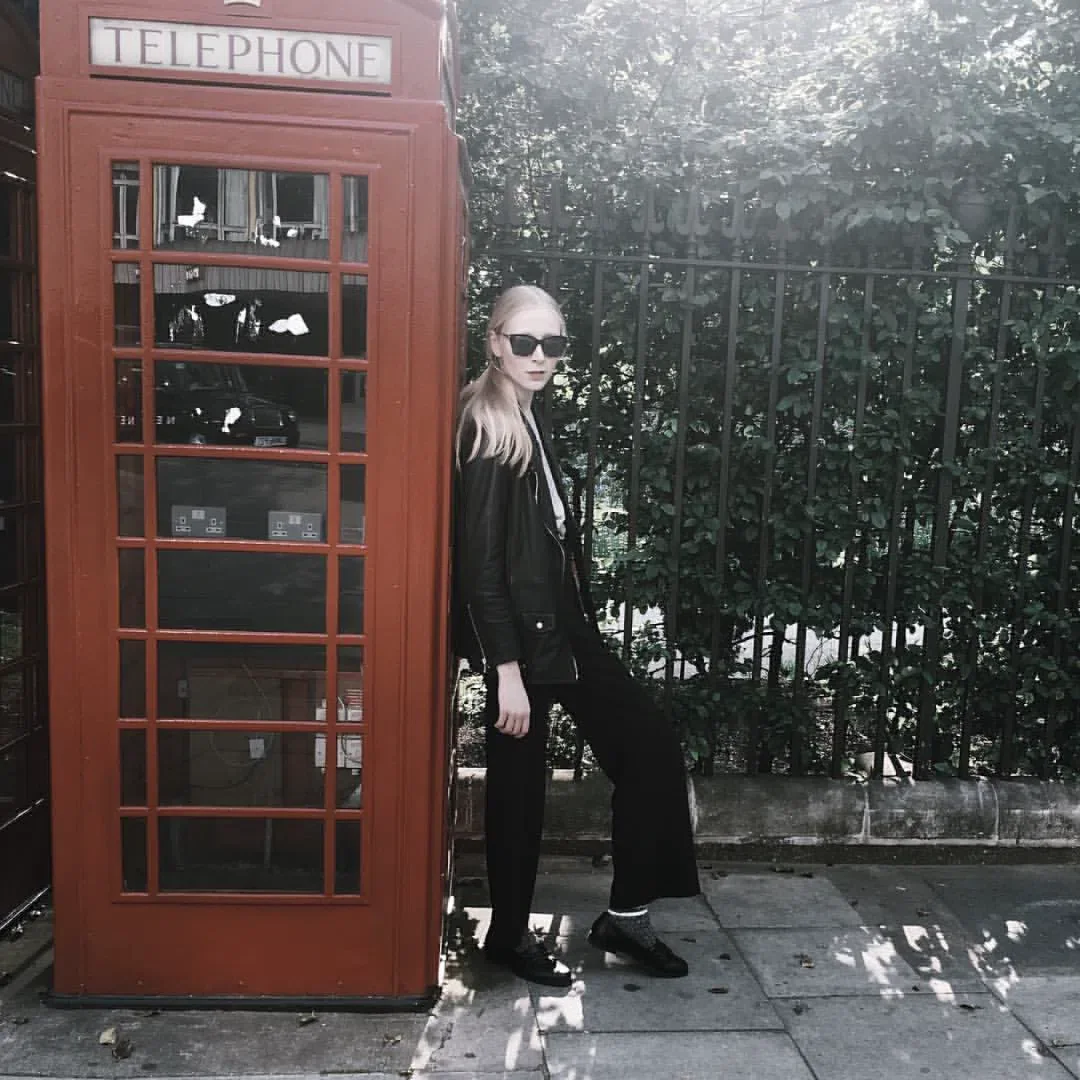
London stands apart in a model's career. It isn't just another name on the "big four" list — it's the most creative and most varied of them, and the one whose difficulty is most underestimated. London is one of my own markets: I walked its castings and shot here, so I'm not repeating other people's stories — I'm speaking from the inside. And the first thing I'll say honestly: London is easy to fall for — yet today, for a Russian passport holder, it's the hardest of all the European markets when it comes to visas and legal work.
From a distance London is covers, daring editorial, street style and the freest-spirited shows of the four. In reality it's also a huge commercial market: catalogue and e-commerce, advertising, lookbooks, showrooms — there's far more everyday work here than glamour. And there's one difference that works in your favour: London is English-speaking — one of the two "big four" capitals (with New York) where language won't be your barrier.
I'm not going to talk anyone out of it — London gave me experience and a trained eye that worked for me everywhere afterwards. But you should go in with your eyes open, especially on a Russian passport. Let's walk through it in order: the look and height that get booked, how agencies, commission and contracts work, the visa and right-to-work question (the most important and most misunderstood part here), what models really earn and how you get the money home, and who this market suits and who it doesn't. In short, this is the honest answer to how to become a model in London without ending up disillusioned.
London prizes character and range, not one type
The first thing I explain to a model before London: this market works differently from Milan. Milan tests whether you fit a strict fashion code; London loves character, individuality and a face that's your own. More than anywhere else in the four, it values variety — at castings you'll see all kinds of types, ages and textures, not one ideal. So London often gives a chance to those who didn't fit Milan's narrower brief.
But don't let the word "creative" mislead you. Behind the daring editorial sits an enormous, very commercial market: British e-commerce and catalogue, advertising, retail. It's this everyday work that feeds most models in London, not the covers. When I first started working in London, that was exactly what surprised me: for all its reputation as a creative capital, there's far more everyday commercial shooting here than glossy editorial. The city's strength is range: there's high fashion here, and steady commercial work, and room for an unconventional look.
And one more thing I tell everyone: London is an English-speaking market. In Milan, Paris or Asia, language still adds a distance; here, if you have even basic English, you immediately understand instructions on set, read the contract and ask your agent questions yourself. For a newcomer that's a huge, underrated advantage.
How to become a model in London: the work that really awaits
Strip away the romance, and a model's work in London splits into a few segments:
- Advertising and editorial. The most prestigious and usually the best-paid — brand campaigns and editorial for the glossies. You don't get there at once, and not everyone does, but London is famous for strong, bold editorial.
- E-commerce and catalogue. The real backbone of earning in London. British online retail is vast, and models are constantly called in to shoot clothing for websites and catalogues: high volume, discipline, a great many frames in a day. Less glamorous, but genuine, regular work.
- Lookbooks and showrooms. Around the buying seasons — shooting collections, fittings, selling to buyers.
- Runway. The most prestigious but the most seasonal — mainly London Fashion Week and the days around it. There aren't enough slots for everyone.
What there's less of than a newcomer dreams: guarantees, and "covers only". The runway and editorial exist and they're the summit, but for most who travel in the core work is commercial, e-commerce and catalogue. That's fine: it's commercial work that gives the money and experience a career is built on.
What look and type are in demand
London is one of the most diverse markets in the world, and the brief here is broader than Milan's. What's prized is a strong, characterful face and individuality rather than safe, easy prettiness; a groomed, healthy look; and the ability to work both in high fashion and in commercial. But precisely because there are so many segments, the city books a wider range of types: for editorial and the runway the brief is closer to high fashion, while for commercial, e-commerce and advertising the demands on height and texture are noticeably softer.
A word on what counts as non-negotiable rather than a nice-to-have:
- well-kept skin and hair, and tidy hands and feet — a model is seen up close;
- minimal make-up at castings: they look at you as you are;
- the ability to walk — checked at runway castings;
- fresh, current snaps (polaroids) and digitals.
London loves character in front of the camera — but not drama in the work. A strong individuality is prized, while "star" behaviour kills a career faster than anything. Even so, this is the market norm, not the law: for commercial and digital content the door is softer than for the runway.
Height, age and measurements: the real numbers
There's a lot of myth here, so let's stick to facts and skip the hard promises. The figures below are a practical guide, not a law — London, with its broad commercial market, departs from the runway standard more often than most.
| Parameter | Practical guide |
|---|---|
| Height (women) | usually ~175–180 cm expected for runway and high fashion; ~173 cm is the practical floor |
| Height (men) | usually ~185–190 cm for fashion; ~183 cm as the lower bound |
| Measurements (women) | "model" measurements to suit the sample garments; exact figures are asked at the casting and re-checked |
| Commercial / e-commerce | height and measurement requirements noticeably softer; booked for a strong commercial profile |
| Age | scouting usually from 16; under 18 only with written parental or guardian consent and the extra protections owed to a minor |
I deliberately write 175–180 as a guide for the runway, not a hard threshold. If your height is closer to the floor, that's not a no: in London it's realistic to aim for commercial and e-commerce, where the requirements are softer than for the high-fashion runway. And on age: under 18 you're a minor, written parental consent is required, and the contract and working conditions are regulated more strictly — don't brush that aside, even if an agency is rushing you.
Visa and the right to work: the hardest part for a Russian model
This is the most important section of the article, and the one usually flattened into "you need a UK visa." In truth it's more nuanced, and a mistake here is expensive. Since Brexit the UK rules on foreign models have tightened, and a Russian passport starts from a harder position than many others.
The key thing to grasp: under UK rules a Russian citizen is a "visa national". That means you need a visa in advance for any trip, even a short one, even just for castings. The visa-free electronic authorisation (ETA) is not available to Russian nationals, and the visa-free "creative" concessions that EU, US and various other nationals use do not apply to a Russian model. This is a common and costly confusion: people read "you can come without a visa" as being about them, when it's about other passports.
Next, it's important to separate two different things: "coming to be seen" and "coming to work".
| Purpose | What you need | Notes |
|---|---|---|
| Castings, meetings with agencies | Standard Visitor visa, up to 6 months | you can attend castings and meetings, but cannot do paid or unpaid work for a UK company — no shows, no shoots |
| Paid modelling work | Creative Worker visa + Certificate of Sponsorship | shows and shoots are work; you need a work visa, arranged only by a licensed sponsor (the agency/producer) |
On a Standard Visitor visa (up to 6 months) you can attend castings, auditions and meetings and make personal appearances, but you cannot do paid or even unpaid work for a UK company. So you can fly in to "show your face" to agencies, but you cannot legally walk a paid show or do a paid shoot.
For real work over months you need the Creative Worker visa (the Temporary Work category). The crucial point: before you apply, your sponsoring agency must issue you a Certificate of Sponsorship — and the sponsor can only be an organisation licensed by the UK Home Office. You cannot sponsor yourself. The visa is granted for a maximum of up to 12 months (or the certificate's length plus up to 28 days, whichever is shorter). There's also a narrow Permitted Paid Engagement exception that does name fashion models among "professional artists," but it requires an established-professional track record, a written invitation arranged in advance, and completion of a single engagement within the first month — so it can't support ongoing work, and certainly not a newcomer.
Working as a paid model on a visitor visa is illegal. It risks refusal of entry, removal and problems with future visas. The host party shares the liability.
A word on sanctions and how a Russian passport is treated. There is no blanket entry ban on Russian nationals: UK sanctions target specific listed individuals, and applications are assessed individually. A 2022 power to apply a separate surcharge and slower processing to Russian applicants was announced but, as of 2026, was never brought in as a blanket measure. In practice, though, scrutiny and questions about the source of your funds have grown since 2022, so budget more time, documents and patience. It doesn't mean "impossible" — it means "plan ahead, and only through a trusted sponsoring agency." Immigration rules change, and this is not legal advice: before you travel, check the official gov.uk site and the UK visa centre.
The agency contract and commission: what to read
The contract is where models most often come unstuck, because they sign without looking. Let's go through it calmly.
In the UK a model is self-employed (freelance), not an employee of the agency. That means you're responsible for your own taxes, and a reputable agency should make your status and terms clear before you sign. The client's money doesn't come to you directly but through the agency: under the UK industry code, payments run through the agency's client account, and a proper agency pays the model within 10 working days of receiving the client's payment. But the clients themselves often pay the agency with a long delay — so money "in hand" arrives later than the shoot finished.
On commission. There's no single "standard percentage" in London, and I wouldn't trust anyone who quotes you a "usual" figure as if it were law; the agency must disclose your exact percentage in writing. What matters is understanding the mechanics: in London commission is often double — the agency takes a percentage of your fee and adds a separate supplement (commonly around 20%) on top, paid by the client. To make it concrete: on a £1,000 fee the client might be billed around £1,150–1,200, and after commission the model nets in the region of £750–850. That's an illustration of the mechanics, not a promise — your actual figures must be written into the contract.
What I always ask you to look at:
- the exact percentage withheld and what else is deducted — advances, costs, who pays for what;
- the timing and order of payouts: money comes through the agency and arrives late — know this in advance;
- penalties and exclusivity — how tightly the contract binds you and what an early departure costs;
- the mother agency: your own agent back home keeps an eye on the terms and steps in during disputes, and for a first trip that sharply lowers the risk;
- licence and reputation — what people who've already worked with this agency say.
How to avoid scams
The rule I repeat to everyone: a real agency earns a percentage of your fee — it doesn't take money from you up front. If at the outset you're asked to pay for a "compulsory" portfolio, registration, courses or a guaranteed contract, it's almost always a scam. Applying to a proper agency is free.
Warning signs worth knowing:
- a paid portfolio or paid training as a condition of working together;
- "scouts" in direct messages from vague accounts asking for suggestive photos or money, writing with errors and name-dropping big names;
- a woolly contract with opaque penalties instead of a proper one;
- pressure and urgency — "decide today, the slot is going";
- reluctance to show a licence, past projects and contacts for models who've worked there.
One important nuance, so you don't get confused. It's normal for an agency, after you sign, to arrange a test shoot and deduct its cost from your future fees. What's not normal is taking money up front for the mere chance to "consider" you. That's the whole difference: commission on what you earn — yes; a fee to get in the door — no.
Safety on set is part of this too. A legitimate agency doesn't summon you to a "shoot" in a private flat with no crew, and doesn't blur the line between modelling and escort work. If something feels wrong, that feeling is itself the reason to walk away.
What to prepare and how to apply to an agency
Good news: to be seen by London agencies you don't need to fly to London or pay for a shoot. Most major agencies accept applications online and for free. The basic kit asked for almost everywhere:
- Snaps (polaroids). Simple photos with no make-up, filters or retouching, in daylight, in close-fitting plain clothing: front, profile, full length and a close-up of the face. The agency needs to see the real you.
- Measurements. Height, bust, waist and hip girths, and shoe size — in centimetres, accurate as of today.
- Digitals / comp card. If you already have shoots, a few of your strongest frames.
- Walk. If it comes to a runway casting, be ready to walk.
How applications actually work — using verified London agencies as examples (check their official sites for current rules and hours, which change):
- Models 1 — one of London's oldest and largest agencies (founded 1968). Takes new-face applications through a form on its site: three simple photos with no make-up or filters are enough.
- Storm — a major agency; new-face applications go through an online form, three photos free of filters and retouching. They only contact those they shortlist.
- Premier — besides online applications, it runs free walk-in open calls without an appointment on weekdays (Monday–Thursday, morning and afternoon) at its office. You don't need professional photos for it.
- Body London — a boutique "values-led" agency with a New Faces division: amateur photos work (front, side and full length against a plain white wall), no professional shoot required.
Good, honest snaps and accurate measurements often count for more than an expensive glossy folder. If you want to prepare strong digitals and snaps, I cover exactly that in my training and on a photo day — it's the very material agencies use to decide. And how to stop tensing up in front of the camera — where the hands go and where to look — is exactly what my guide on how to learn to pose is about.
How much models earn in London and how you get paid
I'll be honest: I won't name a day rate or a show fee, because the figures for one and the same person vary several-fold and depend heavily on segment, season, agency and luck at castings. Anyone who guarantees you an exact sum is someone I wouldn't trust.
London is a market with potentially good fees in advertising and editorial, and steadier but quieter work in e-commerce and catalogue. But "a decent fee" and "money in hand" are not the same thing. More important than the figure itself is the payment mechanics:
- Double commission. The agency takes a percentage of your fee and adds a client supplement on top. What lands in hand is less than the "rate" you were quoted out loud.
- Long payouts. Money from clients comes through the agency and arrives late. Budget a cushion for the first weeks and for life after you get home.
- Moving money home. This is a separate difficulty for Russian models, covered just below.
Since 2022, moving your earnings home to Russia has become genuinely hard. Visa and Mastercard cards issued by Russian banks don't work outside Russia, and cards from foreign banks don't work inside Russia — so the simple "withdraw in London, spend at home" approach fails in both directions. Major Russian banks are cut off from SWIFT, and transfers run into sanctions checks and questions about the source of funds. I won't give a one-size-fits-all recipe here — the routes change, and this isn't financial advice. But you need to agree the method and currency of payment with the agency before you sign, not after, and to think in advance about how you'll fund your life in London.
That's why I honestly call London a market of image and experience: you come here for a strong portfolio, a trained eye and a name that then works for your career in other cities. That's a perfectly sound, workable goal.
Accommodation and daily life: the model flat
Free housing is an illusion best dispelled in advance. The model flat is usually shared: several models in one flat, and you pay for your bed. Most often it works the same way as on other markets: the agency first covers your housing and some costs, then deducts it all from your future fees. A weak season can end at zero or even leave you owing the agency — so the sums and the list of deductions must be in the contract.
London is an expensive city, and you should build that into your budget. Getting around is easiest on contactless/Oyster pay-as-you-go on public transport; check the current fares and caps on Transport for London's own pages. Comfort in the model flat is middling: it's working accommodation near the castings, not a private studio thrown in as a gift. Knowing that in advance means you won't be disappointed on arrival.
Behaviour, discipline and stamina
London, for all its creative freedom, is a market of professionals. A model is expected to be punctual (lateness dents your reputation instantly), courteous with the whole team, ready for long days on set without drama, and able to hold the pace.
A diva temperament kills a career faster than anything. What's prized here is professionalism and reliability; the market's creativity is about the shoots, not about how you behave on set.
Add to that constant readiness. Heels and snaps in your bag, your phone reachable — castings can land out of nowhere and run one after another across the city.
Language and a day in the life
On language I'll say what, for London, is a big plus. It's one of two cities of the "big four" that work in English (the other is New York), and basic English is usually enough: you understand instructions on set, read the contract and deal with your agent yourself. If you push your English up to confident conversation, it pays off faster in London than Italian does in Milan or French in Paris. After Milan and Paris, what helped me most in London was simply that everything ran in English: I followed what was said on set and never felt like an outsider because of the language.
A model's day is not wall-to-wall glamour. More often it's a run of castings across London: the Tube, the journey, the waiting, another casting — and now and then the long-awaited shoot or show. Out of the dozens who turn up, only a handful are booked, and so it goes every time. The stamina to hold that rhythm day after day matters more than any gift for a striking walk.
Social media as part of the job
In 2026, agencies weigh a model's Instagram on a par with her portfolio: the profile, the tone, the consistency. London's digital and commercial-shoot segment is large, and a strong account sometimes adds chances even for a model who's a touch shorter. How much an agency wants to control your social media varies — some ask you to clear posts with them, some don't. Settle that in advance and put it in the contract.
The psychology of the market: pressure and the body
London feels freer and friendlier than Milan: it loves individuality and is less likely to force you into a single ideal. But the pressure here is real too. Castings come in a stream, there's almost no feedback — you rarely learn why you didn't pass — and the competition is huge.
That brings two main risks: burnout and an unhealthy relationship with your body. On weight I'll say it plainly: yes, in the fashion segment your shape is monitored and your measurements can become a topic. But that's no licence to drive yourself into harsh diets and starvation. A good manager will sooner help you hold a healthy shape than break your health; pressure to lose weight fast is a warning sign, not the norm. I always ask my students to make a pact with themselves in advance: a rejection here is a question of the current brief, not a verdict on your looks. Look after yourself — that matters more than any contract.
Seasonality: when it's best to go
Seasonality in London is less pronounced than in Milan: thanks to the big commercial market and e-commerce, there's work outside the fashion weeks too. But the anchor points are London Fashion Week, held twice a year, and the seasons around it.
| Period | What's happening |
|---|---|
| February | London Fashion Week (in 2026, 19–23 February): autumn/winter collections, runway, the most castings |
| September | London Fashion Week (in 2026, 17–21 September): spring/summer collections, the second big peak |
| Between the fashion weeks | advertising, e-commerce, catalogue, lookbooks, showrooms — the core commercial work |
| Summer / holidays | a lull in business activity, especially around the summer holidays |
For a first trip, the seasons around the fashion weeks are handy: agencies hunt new faces most actively then. That said, I'll be honest: commercially London is now considered the most modest of the "big four" — some designers are leaving to show in other capitals. But as a creative showcase and an entry point into the profession it's still strong.
Who London suits, and who it doesn't
London will probably suit you if you have a characterful look and individuality, you love editorial and creative shoots, a broad market with commercial and e-commerce matters to you, you have at least basic English, and you're ready for fierce competition and silent rejections.
And it probably won't suit you if you expect easy, guaranteed money from your first season, aren't ready for the visa bureaucracy (and for a Russian national it's serious here), find competition and shape-monitoring hard to take, or want only the runway with no commercial load.
Is modelling in London worth it: my honest verdict
London is a creative capital and at the same time one of the most English-speaking and diverse markets in the world. To those it takes, it gives a strong editorial portfolio, a trained eye, experience of a large commercial market and a name that then works for a career in other cities. I went through this market myself, and it taught me a great deal.
But on a Russian passport, London is a market you have to plan especially carefully. A visa is needed in advance even for castings, legal work is possible only through a sponsoring agency, and the money and travel questions have become harder since 2022. So I honestly advise many people to treat London not as the very first step, but as a goal you work towards consciously and in advance. If you want a more accessible way into Europe, I have a separate breakdown of modelling in Milan; for the most prestigious, hardest-door market of the four, of modelling in Paris; and for the biggest commercial market, of modelling in New York, which for a Russian is even tougher than London on visas. And take London on with your eyes open: do that, and this market works in your favour.
Frequently asked questions
Do you need a visa to model in London?
Yes. Under UK rules a Russian citizen is a "visa national," so you need a visa in advance for any trip, even just for castings. On a Standard Visitor visa you can attend castings and meetings, but cannot do paid or unpaid work. For legal work you need a Creative Worker visa, and before you apply a licensed sponsoring agency must issue you a Certificate of Sponsorship. This is not legal advice — check gov.uk and the visa centre.
Can you attend castings in London on a visitor visa?
Castings, auditions and meetings with agencies are allowed on a visitor visa — that doesn't count as work. But you cannot walk paid or even unpaid shows and shoots for a UK company on it. To actually work, you need a Creative Worker visa through a sponsoring agency. Either way, a Russian national must arrange the visa in advance.
How much do models earn in London?
You can't name an exact sum: fees depend heavily on segment, season and agency. What matters more is the mechanics: in London commission is often double (a percentage from the model plus a supplement on top for the client), and money comes through the agency with a delay. So the "rate you're quoted" and "money in hand" are different things.
Do London agencies charge for registration or a portfolio?
No. A real agency earns commission on your bookings and doesn't take money up front for registration, a "compulsory" portfolio or courses. Applying online is free. A paid test shoot deducted from future fees is only possible after you sign — a fee for the mere chance to "consider" you is a sign of a scam.
How do you apply to a London agency?
Most major agencies accept applications online and for free — usually you need simple photos with no make-up or filters (front, profile, full length) and current measurements. Models 1 and Storm, for example, take applications through a form on their site, Premier also runs free walk-in open calls on weekdays, and Body London accepts amateur photos from new faces. Check the official sites for hours and rules — they change.
When is London Fashion Week in 2026?
In 2026 London Fashion Week runs twice: 19–23 February (autumn/winter collections) and 17–21 September (spring/summer collections). For a first trip, the seasons around the fashion weeks are handy — agencies look at new faces most actively then.
Do you need to speak English to model in London?
Basic English is usually enough — and that's a big London advantage: it's one of two cities of the "big four" that work in English (along with New York), with no extra language barrier. Confident conversation pays off quickly: it's easier to follow instructions, read the contract and deal with your agent.
How do you get a fee from London back to Russia?
This became hard after 2022: Visa and Mastercard cards from Russian banks don't work abroad, and foreign cards don't work in Russia; major banks are cut off from SWIFT and transfers run into sanctions checks. There's no universal recipe, the routes change, and this isn't financial advice — agree the method and currency of payment with the agency before you sign.
How tall do you need to be to model in London?
For the runway and high fashion, women are usually expected at around 175–180 cm and men at 185–190 cm; the practical floor is roughly 173 cm and 183 cm. But London has a huge commercial market and e-commerce, where height and measurement requirements are noticeably softer, so there are more chances off the runway than on narrower markets.
London or Milan — where should you go first?
Both belong to the "big four". Milan is the more workmanlike fashion market, with a strong showroom and fitting segment, and for a Russian national the visa is usually easier. London is the most creative and the English-speaking one, but on a Russian passport it's harder on visas and legal work. So as an accessible first step into Europe Milan is more often advised, while London is planned in advance and consciously. More in my breakdown of modelling in Milan. And the full side-by-side of all four capitals is in my big four comparison.