Modelling in China 2026: Pay, Visas, Contracts & Scams
By Alina Pavlushova · Modelling coach
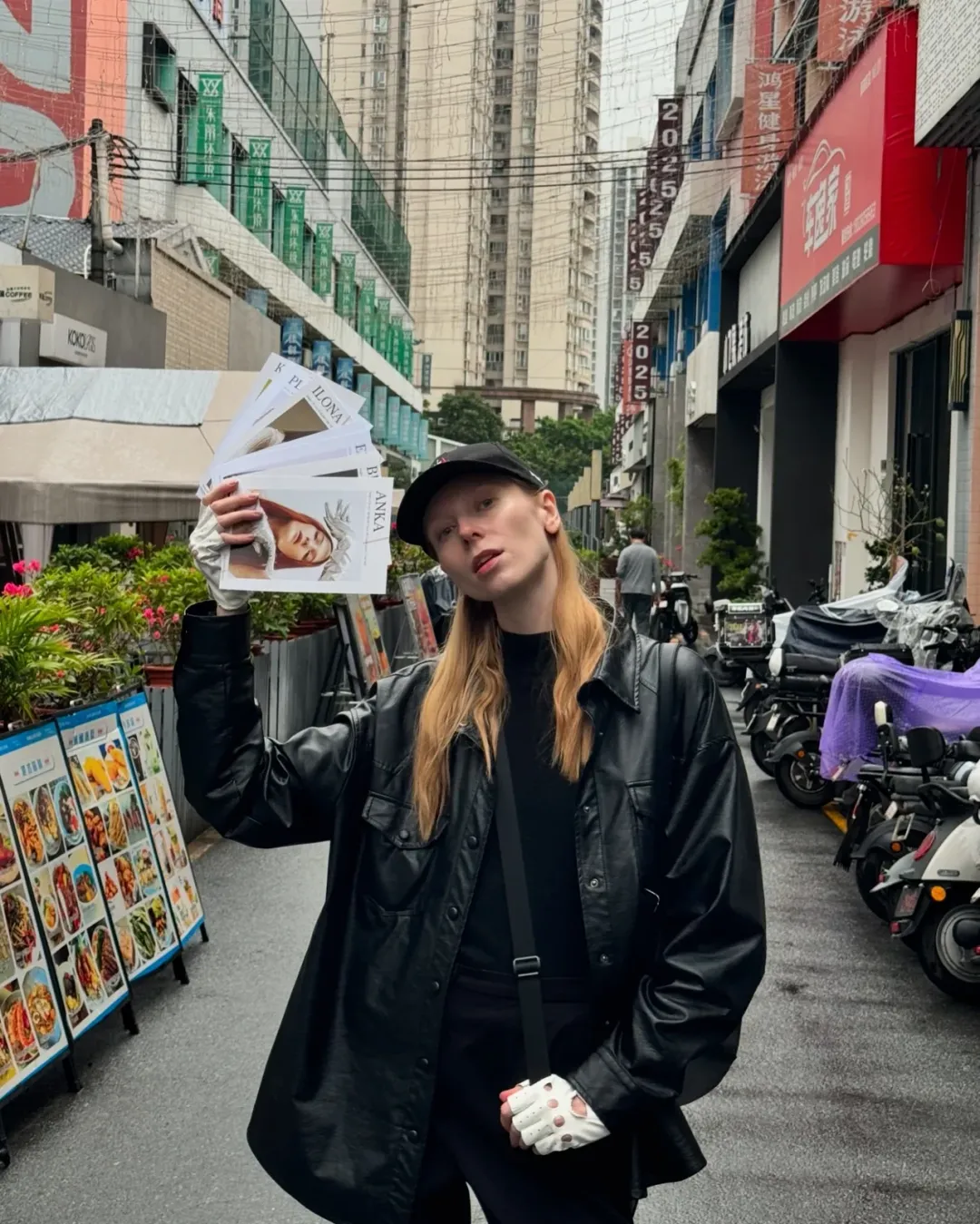
Working as a model in China is one of the best-paid and, at the same time, one of the most punishing routes in our profession. Over the years I've sent more than a few models out there, and I've watched both endings: those who came home with real experience, real money and a strong commercial portfolio — and those who lost three months, finished out of pocket, and felt they'd simply been used. The difference almost never comes down to looks or luck. It comes down to preparation. This article is what I tell every model before they sign: how the Chinese modelling market actually works, what the pay really looks like, where you stand on visas, and exactly where the traps are hidden.
I won't promise you figures. The numbers floating around online are wild — from a couple of hundred dollars a day to life-changing money in a single season. Those are the stories of the very top, and one-off cases at that, not the norm. It's more honest to talk in ranges, deductions and risks, so that's what we'll do.
Modelling in China isn't one market — it's several
The most common thing models come to me with sounds like this: "I've been invited to model in China." My first question is always — which city, and for what work? Because there is no single "China" in our profession. The market is split city by city, and each major city is, in effect, its own industry, with its own clients, pace and money. A contract in Hangzhou and one in Guangzhou are two very different lives.
Shanghai — fashion and brands
Shanghai is closest to what most people picture when they hear the word "model": brands, advertising campaigns, lookbooks, showrooms, and Shanghai Fashion Week. This is where the fashion side is strongest and the work for bigger names lives. If your aim is a portfolio with brands and more polished, editorial-leaning shoots, this is the main way in — though the competition here is also the fiercest in the country.
Hangzhou — the e-commerce capital
Hangzhou is home to the headquarters of Alibaba, Taobao and Tmall, and around them sit thousands of brands and shoot studios. It's an enormous flow of commercial, e-commerce work and — from what I hear from people working there — usually the highest and most stable day rates in the country. The city is built for volume: less creativity, more conveyor belt. For a model whose purpose is to earn on catalogue and product shoots, Hangzhou is often the smartest choice.
Guangzhou and Shenzhen — the mass market
The south is catalogues, factory orders, fast fashion. The pace is relentless, the volumes huge, and the day rates usually lower than in Shanghai or Hangzhou. There's no hard "city equals money" table — much comes down to the client, so treat this as a tendency, not a law. But as a rule of thumb: the south is about the number of shooting days, not a high rate per day.
Beijing — advertising and lifestyle
Beijing is more often associated with advertising campaigns, beauty shoots, lifestyle content and television. The market here is more varied, but also more crowded — treat this as a rough guide, not a guarantee.
Remember the main point: "I'm going to model in China" means nothing on its own. It only takes on meaning once you know which city you're going to and what you're being called to do. Your earnings — and whether you'll even enjoy the job — hang on that.
What modelling work actually awaits you in China
Strip away the romance, and the overwhelming majority of work for foreign models in China is commercial. Not the Paris runway, not editorial for a glossy, but a conveyor belt of content for online retail:
- e-commerce shoots for the marketplaces — Taobao, Tmall, JD.com;
- catalogue shoots and lookbooks for brands;
- product and still shoots — clothing, shoes and accessories on a white background, shots for showrooms;
- advertising clips and short-form video content.
Runway and editorial do exist, but they're a smaller, far more competitive slice, and surviving on that alone as a newcomer is all but impossible. In China, the money is in commercial work.
And what's prized here isn't a temperamental personality or a cover-girl face — it's a specific set of working qualities. Speed: changing looks and poses in seconds. Stamina, because the days can be very long. Discipline: following direction precisely, without argument. And a predictable, even result, frame after frame. In my experience, models who work fast and don't bring drama to set earn more than talented but slow ones.
The volume of shooting stuns newcomers. On a calm day it's often dozens of looks; on a fast e-commerce project the count runs into a hundred and more, and on the toughest days I've heard of 150 looks in 13 hours. If someone promises "an easy little photoshoot", that isn't commercial China.
Livestream selling and short video: Douyin and Xiaohongshu work in China
Here's the part the old guides barely mention. Over the last couple of years, demand for video and livestream shoots has shot up. Brands now film models not only for static product cards but for short clips and live-selling streams on Douyin and Xiaohongshu (Little Red Book), where the product is sold to camera live.
This asks something different of a model: not just a good still pose but movement, presence on camera and the ability to react live. If you can hold your own on video and not only in photos, that's a real edge right now — tell your booker, because models like that are in active demand. I won't throw market-size figures around, but as a trend this is now a settled and growing part of commercial work.
The best time of year to model in China
The market is intensely seasonal, and the month you travel decides almost everything — whether you have a packed schedule or simply sit in a rented flat for two months, sliding into the red. Treat the dates here as a guide only: demand drifts year to year, and the Chinese holidays move with the lunar calendar.
The two peaks are spring (roughly March to June) and autumn (September to early November). In spring, the spring–summer collections are shot, castings are plentiful, rates are higher and contracts are extended more often — though the spring peak is less predictable than the autumn one. Autumn is the big run-up: everything is shot in advance for the 11 November and 12 December sales.
That autumn peak is built around Singles' Day (11 November) — the biggest sale of the year, around which brands do a huge share of their annual revenue. Catalogues are shot well in advance, so the real workload lands in September, October and the first days of November. In 2026, Singles' Day falls on a Wednesday. Of the two big sales it is the undisputed peak: Double Twelve (12 December) is noticeably smaller and arrives once things are already winding down.
The quiet stretches are Chinese New Year (the Spring Festival), when the country all but stops for a fortnight, and high summer (roughly July and August), when the heat and a general slowdown take the wind out of the market — though this varies by city. One caveat: Chinese New Year is tied to the lunar calendar and shifts every year. In 2026 it falls around mid-February, so the "dead" stretch is really the second half of February rather than a vague "January–February". Check the calendar for the specific year.
Travelling out of season is all but guaranteed to burn money on housing while you sit without castings. If you're choosing your own dates, aim for spring or the autumn run-up to the sales. If you've no choice over timing, at least agree with the agency in advance whether there'll be any work at all.
What look is in demand in China
Here it pays to be honest with yourself before you set off. The commercial market hires specific types to suit the product, and being in demand here is about function, not about whether you're beautiful or not. A few looks hold steady demand:
- Slavic and pronounced European, Western looks — readily booked for product shoots precisely for those non-local features.
- Mixed types, especially Euro-Asian looks.
- Photogenic model faces with expressive features.
- A calm, commercially clean face with nothing extreme — it sells the product well without pulling attention onto itself.
Let me stress this: that's a description of observed demand, not a judgement of people. Fit the current brief and you work a lot; don't fit it and the market simply doesn't notice you. A strong portfolio and experience help, but they can't override demand. If you don't match today's brief, it isn't that you're "not good enough" — it's that a different type is wanted for this product right now, so don't take a working rejection personally.
Model requirements in China: height, age and measurements
There's no single hard threshold — every agency, and every type of work, sets its own bounds. But the market guideline runs roughly like this.
Height is usually from around 175cm (5'9") for women and 185cm (6'1") for men. For e-commerce the requirements are softer: how the clothes sit and how much work you can put in matter more than runway height. These are typical minimums, and they often shift to suit the client.
On age, most agencies prefer models aged 18 and over, and for commercial contracts with foreigners that's a sensible practical marker. But it's an agency preference, not a clean legal minimum: scouting of new faces often starts at 17, and within China there are specific legal provisions for minors in the field. For under-18s it's all more complicated — more paperwork, mandatory chaperoning and markedly fewer real opportunities.
As for measurements, the classic 90-60-90 is a guide, not gospel. For e-commerce, what matters more is the stability of your weight and measurements across the contract (more on that in the penalties section). They'll measure you on site, and those figures are often written in, so take your own honestly before you travel, with no rounding in your favour.
Modelling in China for women and for men
This guide is written largely with women in mind, for a simple reason: there are objectively more women's contracts on China's commercial market. But there is work for men too — demand for the male commercial type is steady, just lower in volume. The shoots are the same (catalogues, marketplaces, advertising), and so is the logic of preparation and the contract; the difference is mainly the height requirement (from around 185cm) and fewer bookings. So everything below on money, visas, contracts and risks applies equally to women and men.
The pace of work and the psychological toll in China
This is the most underrated part of the job, and exactly where people most often come unstuck. Everyone asks about the money; almost no one asks how much China wears you down psychologically. The market here isn't cruel — it's simply very fast and impersonal.
Shooting days run 10–14 hours, and longer on e-commerce marathons. There can be several castings in a day, coming at you in a stream. Rejection without explanation is the norm, not grounds for hurt feelings: at every casting you're compared with dozens of others, and the decision is made in a minute. No one is going to nurture your potential, spell out the brief at length, or work around your mood.
Over the years I've noticed a simple pattern: the ones who break aren't the weakest-looking, but those who weren't ready for the pace, or for being treated as just another body on set. Burnout comes not from the hard work as such, but from the gap between a glamorous trip and the reality of a production line. Those who hold the rhythm and don't take rejections to heart get work and earn — a sturdy temperament matters more here than an extra centimetre of height.
How much do models make in China
The most common question — and the trickiest. I won't quote you an "average model salary in China", and I'd distrust anyone who does. The spread is enormous, and the eye-catching figures online are, as a rule, top-earner stories, not the typical case. Earnings depend on the city, agency, season, your look, and how much you actually work. And the "gross" rate and the money in your hand are two different things.
I won't name a precise range for a first trip: any such figure is someone else's story, not your guarantee. A realistic frame for a newcomer without a big name sounds more like this — over a proper two-to-three-month contract, in a normal season with normal bookings, you can come home with a modest but real profit. Or you can break even, or end up down on the trip, if you're unlucky with the city, the timing or the agency. Returning models report very different sums, but those are other people's cases, not a promise.
Far more important than the figure is understanding the payment mechanics, because that's exactly where newcomers lose money. That's the next section.
Working as a model in China is money earned through systematic, disciplined work — not "easy money". A newcomer's first contract more often brings a modest sum than life-changing money in a single season, and that's a perfectly normal start. Anyone promising guaranteed big sums up front either doesn't know the market or is selling a dream.
How models really get paid: guarantee, percentage and the debt pit
I'm setting this out separately, because the payment mechanics are what newcomers are explained least often, and the traps are hidden right here.
Guarantee or percentage
There are two basic payment formats.
With a guaranteed contract, the agency pays a fixed sum for the period regardless of how many shoots you do. The figures vary a great deal and need checking per contract. This format is calmer, but the ceiling is lower, and expenses are still deducted.
With pure percentage, you earn from the volume you shoot, with no guarantee. Potentially more, but if the work is thin or the season is weak, you can come out close to nothing.
Treat any "guarantee" soberly: ask exactly what is guaranteed, under what conditions the sum holds, and what gets deducted.
The debt pit: why your first weeks net almost nothing
This is the key thing newcomers aren't told. Often the agency pays for your flight and accommodation up front, then deducts it from your future fees. Until that debt is cleared, you effectively receive nothing in hand — the first shoots go towards repayment. This isn't necessarily a con: it's how many normal agencies operate. But understand it before you sign, or the first "empty" month will come as a shock. It's exactly why a short trip of a couple of weeks makes little sense — you risk leaving just when you've moved into profit.
What gets deducted from your fee
| Item | Note |
|---|---|
| Agency commission | Around 40–50% on average, once both a mother agency and a local agency take their cut |
| Flight | Often advanced, then withheld from fees (the debt pit itself) |
| Housing | Usually "provided" but deducted; standards vary (see the flat section) |
| Test shoots | Sometimes charged to the model |
| Transport | Travel between castings and shoots |
| Image-usage royalties | Sometimes set out separately — where and for how long the shots are used; check this clause |
| Visa and medical certificate | Document processing |
| Taxes | Depend on the contract type and the city |
Getting paid and moving money home
Payment on the ground often comes in cash — sometimes literally in an envelope — and sometimes via WeChat, and for this market that's normal. Agree up front, in writing, in which currency, how often (weekly, fortnightly, at contract's end) and by what method.
Getting money out of China and home is the part people underestimate. Transfer limits, banking access and paperwork vary a lot by your nationality and home country, so plan the route before you fly rather than figuring it out on the ground. Talk it through with your agency and with models who've recently come back. I won't recommend specific schemes — they change fast.
Financial transparency isn't nit-picking. If an agency squirms at a simple question — "when and how will I be paid?" — that's already your answer.
Visas for modelling in China: the Z visa and the tourist-visa trap
This is the most important section on the real risks — read it carefully. Many people skim it and then run into trouble at the border.
You can only work legally as a model in China on a Z work visa — with a work permit and a residence permit. Working on a tourist (L) or business (M) visa breaks the law, and the consequences land on you, not the agency: there have been real raids in which dozens of foreign models were detained for working on the wrong visa. The consequences are detention, a fine, deportation and an entry ban.
Now the key nuance many agencies quietly skirt around. Getting a Z visa is objectively difficult for a young, beginning model: the system is largely built for specialists with proven experience, and genuine sponsorship for a newcomer is uncommon. As a result, a significant share of foreign models in China work on a tourist visa. And when an agency breezily says "don't worry, we'll sort it all out", very often that means precisely this — a tourist visa, with the legal risk shifted onto you.
What to do about it in practice:
- ask directly which visa you'll be working on and who the sponsor is — don't settle for a vague "it'll be fine";
- if it's a legal Z visa, check that they're arranging the work permit and residence permit, and build in time (medical certificate, invitation, weeks of paperwork — there are no fast legal routes);
- if they tell you honestly "on a tourist visa, but it's normal", understand that you'll have no protection, and weigh the risk consciously;
- don't hand your passport to the agency "for safekeeping" unless there's a genuine need.
I'm not saying "never travel on a tourist visa" — the market is the way it is. I'm saying: know what you're agreeing to, and don't believe that "the agency will cover you". At the border, there'll be no one to cover you.
Housing in China: what a model flat really is
Newcomers barely ask about housing, and then it becomes the first shock. On the contract it's a line of deduction, but in life it's where you'll spend two or three months — so let's take it on its own.
The standard is the so-called model flat: shared rented housing from the agency where several models live. At strong agencies that's a decent flat, two to a room, with a shared kitchen and living room. At small ones you can find four or five to a room, in spartan conditions.
What to be ready for. Many flats have a curfew — a "home by such-and-such a time" rule — and you can be fined for breaking it. Some mother agencies hand out a small weekly food-and-transport allowance (a few tens of US dollars a week), but it isn't everywhere, and it isn't a gift — that advance is usually deducted later too. And remember: the cost of housing is almost always withheld from your fee, even if it's called "free".
Before you sign, ask for photos of the actual flat you'll be put in, and ask: how many to a room, who else lives there, is there a curfew and fines, is the housing part of the debt? A reasonable agency answers calmly. If they squirm at simple questions — that's already a signal.
Safety and the scams in China's modelling business
The glossy guides don't like to write about this, but without it the article would be naive. Most contracts in China are simply hard commercial work. Even so, it would be dishonest to pass over the dark side in silence, so I'll say it plainly.
The KTV and karaoke-bar bait-and-switch
The most dangerous scam, which every model has to know about: under the guise of "modelling work" or "paid socialising with guests", you're invited into KTV clubs for what the industry calls hostess or "consumption" work — entertaining clients at the table, drinking with them, providing company. This has nothing to do with modelling. The tells: pay that's suspiciously high and "easy"; compulsory "dinners with clients" or evening "events"; vague wording about your duties; reluctance to show real shoots and a client portfolio. Any offer that pays you "for company" or "for work in a bar" is grounds to refuse and contact your mother agency.
Fake agencies and one-season outfits
There are operations with no real history that vanish once they've taken your money — or once they've worked you through a season with no payout. That's exactly why it's so important to travel through a mother agency at home, which vets the Chinese side.
Legal vulnerability without a Z visa
If you're working illegally, there's essentially nowhere to take a complaint about non-payment or pressure — you're the one exposed. Another reason to ask the visa questions in advance.
Basic protection for a model travelling alone:
- travel only through a vetted mother agency and stay in contact with it; arrange regular calls with someone at home who knows your schedule;
- keep your embassy or consulate contacts, and copies of your documents and contract, stored separately;
- keep emergency money on you for a flight home;
- treat any offer "outside the shoots" — parties, dinners with clients, trips with people you barely know — as a default no;
- if they pressure you, rush you into signing, threaten fines or withhold your documents — that's an alarm bell, not "just how the work is".
I'm not writing this to scare you off — most trips go fine. But a level-headed model who knows the scams in advance doesn't fall into them, while a naive one does.
The model contract in China: red flags and a checklist
"Choose a transparent contract" is sound advice, but useless without specifics. Here are the points I go through line by line before a model signs:
| Red flag | What to look at |
|---|---|
| Guarantee or percentage | What sum is guaranteed, on what conditions, and what's deducted from it |
| Debt for flight and housing | How and from what it's repaid, in what order you start receiving money in hand, what happens if work is thin |
| Commission | The exact agency percentage and whether there's a separate mother-agency cut — combined |
| Deductions | For tests, housing, transport, visa — what exactly is deducted and how much |
| Image-usage royalties | Where, how and for how long your shots will be used, and whether they pay extra for an extension |
| Measurement penalties | Sanctions for weight gain or +2cm on measurements are common practice; check the thresholds and amounts |
| Curfew | Whether there are fines for breaking it |
| Termination | Whether you can leave early and at what cost, and whether the agency can tear up the contract unilaterally |
| Payouts | Currency, frequency, form (cash or transfer), how you get your money at the end |
| Visa | Which visa is written in and who's responsible for it |
Before you sign, run through this:
- The contract is in a language you understand (or with a certified translation).
- Specific sums and percentages are written in, not "we'll discuss it on site".
- It's clear which visa is being arranged and who the sponsor is.
- The housing terms are fixed, and so is who pays for it.
- There's a clause on termination and getting home.
- Your mother agency has seen and approved the contract.
Put every verbal agreement into the text: "we agreed it out loud" doesn't hold up in a foreign country. If, on any of these points, you're told "don't worry, it'll all be fine" instead of a written wording — slow down.
How to choose a modelling agency in China
The quality of the agency decides almost everything. The levels vary enormously:
- strong international agencies — transparent terms, good clients, some legal protection;
- mid-tier commercial agencies — they work, but predictability is shaky;
- weak and toxic agencies — late payments, pressure, manipulation, murky terms.
What I look at when choosing:
- reputation on the international market and a real track record, not just a pretty Instagram;
- genuine reviews from models who travelled through this specific agency, and to China (ask directly, don't be shy);
- transparency of the contract and financial terms, with no "we'll sort it out later";
- a sound mother agency at home and a sensible booker who guides you and stays reachable.
A mother agency and a competent booker are your main safety net on the ground. I'd advise almost no one to travel to China alone: there are too many places where a newcomer with no cover gets used — no vetted contacts, no protection, negotiating on your own and often not in your own language. A solo trip won't necessarily end badly, but the risk is disproportionately high, and a vetted mother agency sharply reduces it.
What to prepare before you fly to China
Good preparation saves you your first fortnight and your first money on the ground. Here's the minimum worth pulling together beforehand.
- Polaroids and digitals — 7–10 simple, clean shots with no make-up and no retouching: portrait, full-length, profile, back view, in a swimsuit or something close-fitting on a plain background. This is what the Chinese side uses to decide on you. How to hold yourself in those frames — no stiffness, no dead poses — is exactly what posing basics covers.
- Fashion shots — 5–7 strong frames from your portfolio that show what you can do on set (if you have them).
- A comp card (composite card) — a card with your best photos and current measurements: height, bust-waist-hips, clothing and shoe size, eye and hair colour.
- Fresh, accurate measurements — take them right before you travel, and honestly: everything gets re-measured on site, and a discrepancy with the contract can mean a fine.
- A printed portfolio — Chinese clients like paper, so a printed portfolio and comp card at a casting often work better than a phone.
- A runway-walk video — a short clip, if you're aiming at runway.
- A basic casting wardrobe — pared back: a plain close-fitting top, well-fitting jeans or trousers, neutral heels.
Language and communicating on castings and shoots in China
The language barrier frightens people more than it should. In practice, a commercial shoot runs on gestures, references and demonstration: the photographer or stylist shows you the pose and you copy it. With the bigger agencies, English usually isn't required — they have their own coordinators and translators. Smaller ones sometimes want basic English to save on translation.
What will genuinely come in handy:
- WeChat — you can't function without it: schedule, addresses, sometimes payment all live there. Install it and get the hang of it before you fly.
- A phone translator that works without a VPN inside mainland China. China blocks a lot, so check in advance what actually opens for you, and have a working one ready before you go.
- A few basic phrases, and the habit of double-checking through an app rather than nodding along blindly.
Knowing Chinese is a nice bonus, not a requirement. What's needed is a readiness to grasp the brief quickly, without words.
Who modelling in China suits, and who it doesn't
I'll say it as it is — this market isn't for everyone, and there's nothing shameful in that.
China will suit you if you:
- are physically hardy and ready for long shooting days;
- take rejection and criticism calmly, without taking it personally;
- can work at a high pace without long pauses;
- are going to earn, not to "play at being a model";
- learn fast, listen and adapt.
China probably won't suit you if you:
- expect a careful, individual approach;
- want only runway or editorial;
- find criticism and rejection hard to take;
- aren't up for routine commercial work;
- burn out quickly under load.
There's no "good" or "bad" here — China is simply a particular type of work, and an honest answer to yourself saves you money and nerves. If a calmer, portfolio-first market sounds more like you, I've written the same honest guide to modelling in South Korea.
Is modelling in China worth it? The verdict
The Chinese modelling market runs like a conveyor belt. There's minimal glamour, but handled properly it gives a great deal: valuable international experience, real earnings, professional discipline, a strong commercial portfolio, and an understanding of how the industry works from inside.
But all of that goes only to those who understand where they're going and why. You chose a vetted agency and read the contract. You got to grips with the visa and didn't turn a blind eye to the risks. You prepared your polaroids and your temperament, and set realistic expectations on the money — and then the trip very likely pays off. Those who went in blind, on promises of "you'll figure it out there", almost always come back disappointed. I say this, sadly, from other people's hard knocks.
In short: China can be one of the strongest steps in a modelling career — but only for those who treat it as work, not as an adventure.
Frequently asked questions
Can you model in China without an agency?
Technically yes, but it's very risky. Without a mother agency you have no legal protection, no vetted contacts and no control over your money or visa — and models in exactly that position get used most often. As a mentor I almost always advise against it.
Is modelling in China worth it?
Yes, if you're hardy, take rejection calmly and are genuinely going to work — it can be one of the strongest steps in your career. If you expect a careful individual approach, only runway and "easy money", probably not — a quieter, image-led market like modelling in South Korea may fit you better. China rewards discipline and a sober head. And if you're still weighing the two countries against each other, I've put them side by side in my China vs South Korea comparison.
Can you make money modelling in China?
Yes — in a normal season, with normal bookings and a reasonable agency, earning real money is genuinely possible. But it's money for hard, systematic work, and commission, housing and the flight are still deducted. No one honest will promise specific sums in advance.
Can you model in China without experience or a portfolio?
Yes, newcomers do get taken — the commercial market values a fitting, "selling" look and a strong work ethic more than a big name. But you still need basic polaroids and measurements, and earnings on a first contract are usually more modest than an experienced model's.
How much can a beginner model make in China on a first contract?
There's no honest precise number, and anyone who quotes a guaranteed sum is selling a dream. With normal bookings over two to three months you can come home with a modest but real profit; with bad luck on the season or agency, you break even or worse. Commission, housing and flight come off the top.
Are guaranteed model contracts in China legit?
Yes — a fixed sum for the period regardless of the number of shoots. It's a normal arrangement, often calmer than a pure percentage, but expenses are still deducted and it won't bring windfalls. Don't trust the word "guarantee"; trust whether the contract states the sum, dates, conditions and deductions.
How much commission does a model agency take in China?
Around 40–50% on average — both a mother agency and a local agency usually take a cut, which together comes to roughly half your fee. Always confirm the exact percentage and structure in the contract first.
How do models get paid and move money home?
Payment on the ground is often cash or via WeChat — normal for the market. For moving money home there's no universal recipe: limits and rules depend on your nationality and home country. Agree the currency and payout frequency in writing, and plan the route in advance with your agency and returned models.
What height do you need to model in China?
The market guideline is from around 175cm (5'9") for women and 185cm (6'1") for men. But it's not a hard law: for e-commerce and catalogue shoots the bar is softer, where how the clothes sit and how hard you work matter more than runway height. Requirements shift to suit the client.
What look is in demand in the Chinese modelling market?
Steadily in demand: Slavic and pronounced European looks, Euro-Asian mixed types, photogenic model faces, and a calm "commercially clean" type that sells the product well. The key thing to grasp: on the commercial market a look is a function for a brief, not a judgement of whether you're beautiful.
When is the best time to go model in China?
The best windows are spring (roughly March to June) and the autumn run-up to the 11 November and 12 December sales (September to early November). The low season is Chinese New Year (around mid-February in 2026) and the hot summer. Dates shift with the lunar calendar, so check them for the specific year.
What fines can a modelling agency charge in China?
The most common are measurement penalties: weight gain or an increase beyond an agreed threshold. There can also be sanctions for breaking the model-flat curfew, and deductions for failing to meet contract terms. The thresholds and amounts should be in the contract — confirm them before you sign, and measure yourself honestly before you travel.
What is the "debt pit" in a China model contract?
It's when the agency pays for your flight and housing in advance, then clears that debt out of your first fees, so until it's cleared you receive almost nothing. This is legal and widespread, but you need to know about it so an empty first month isn't a shock. It's exactly why short trips don't pay off.
How long is a model contract in China?
Typically two to three months. In high season contracts are often extended. Short trips of under a month rarely pay off: time goes on settling in and first castings, and the "debt pit" means you've only just moved into profit.
Do you need a visa to model in China?
Yes. For legal work you need a Z work visa with a work permit. Working on a tourist visa is illegal and risks detention, a fine, deportation and an entry ban, with the liability on the model. Yet young newcomers are rarely granted a Z visa, so many work on a tourist visa — and then all the risk sits with the model. Ask directly which visa you'll be working on.
What happens if you model on a tourist visa in China?
Formally, it breaks the law. The real consequences are detention, a fine, deportation and an entry ban, plus complete legal vulnerability: if you're not paid or you're pressured, there's essentially nowhere to complain. If you agree to such an arrangement, do it with your eyes open.
How do you tell a real agency from a KTV scam?
Real modelling work is shoots, not "dinners with clients" and evening "events". Be wary if the pay promised is suspiciously easy and high, the duties are vague, they want you to escort guests, or they won't show real shoots and a client portfolio. Anything about "entertaining guests at karaoke" is KTV hostess work — refuse and contact your mother agency.
What should you check in a model contract before signing?
At minimum: a contract in a language you understand; specific sums and percentages; the guarantee-or-percentage scheme; the order of repaying the flight-and-housing debt; the exact commission; the deductions (tests, housing, transport, visa, image-usage royalties); the penalties (weight, measurements, curfew); the visa terms and sponsor; the housing terms; a termination-and-return clause; and the currency and method of payout. Put every verbal agreement into the text, and show it to your mother agency first.
What are the living conditions for models in China?
Usually a "model flat" — shared agency housing for several models. At larger agencies it's more often two to a room; at small ones it can be four or five, and noticeably more cramped. There may be a curfew and fines, and the cost is almost always withheld from your fee. Ask for photos of the actual flat and confirm the details before you sign.
Do you need to speak English or Chinese to model in China?
You don't need Chinese. The larger agencies have coordinators and translators, and on a shoot much is explained by gestures and demonstration. Small agencies sometimes want basic English to save on translation. What's essential is different: WeChat for the schedule and contact, and a phone translator that works without a VPN inside mainland China.
Is it safe for a model to go to China alone?
Most trips go fine, but caution is essential. Travel through a vetted mother agency and stay in contact; arrange calls with someone at home who knows your schedule; keep copies of your documents and consulate contacts stored separately; keep money for a flight home. Refuse offers "outside the shoots". Withheld documents, fines or a rush to sign are warning signs.
What if the agency delays or withholds your modelling fee?
First, record everything in writing (correspondence, terms) and bring in your mother agency at home — working through one gives you leverage. But if you were working illegally on a tourist visa, you have almost none — which is exactly why the visa question is settled in advance, not "after the fact".
Can you break a model contract and leave China early?
It depends on what's written in the contract. There are usually penalties or deductions, and sometimes a partial refund of costs to the agency. That's precisely why the termination-and-return clause needs reading first.